
Friends,
I make a habit of reading, or at least scanning through, the online English language edition of Asahi Shimbun, Japan’s leading newspaper, every morning. It is one way to track Japanese political and cultural changes, US-Japanese military and economic dynamics, and at least some Northeast Asian military developments.
And sometimes there is an inspiring gem, as was the case in last Friday’s interview with former Hiroshima Mayor Takashi Hiraoka. At age 96 he has lived a long, courageous, and inspiring life. It took him from his youthful studies and escape from Japanese colonized Korea, to a career in journalism where he reported about Japanese and Korean A-bomb survivors in the first desperate years after the war, to his election as Hiroshima’s mayor.
Most impressive and inspiring are his commitments to Japan’s peace Constitution and his warning’s about the importance of opposing the Takaichi’ government’s campaign to transform Japan into a war making state.
Read the interview. It will make your day, as it did mine.
For Peace, Justice, and Truth,
Joseph
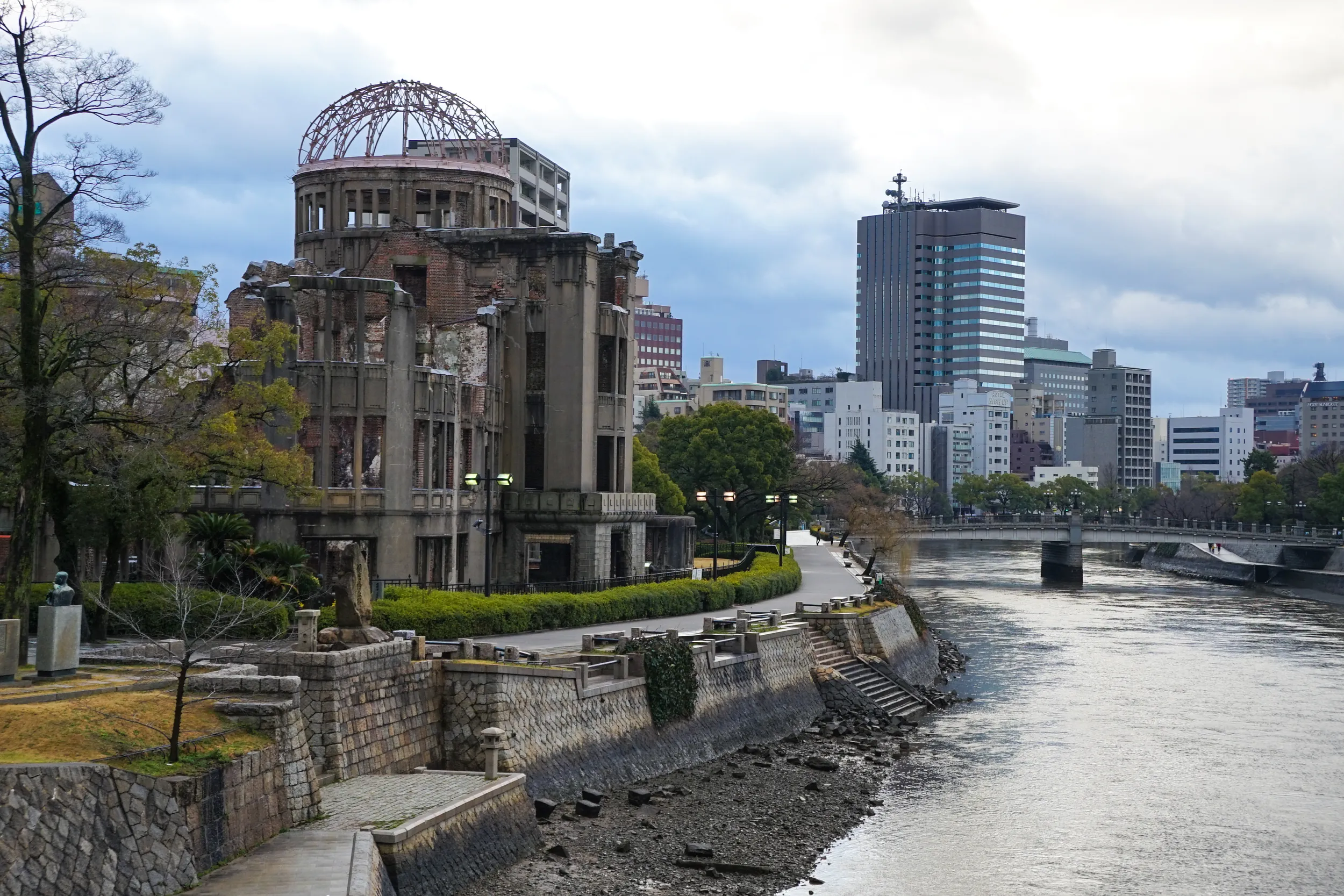
HIROSHIMA—A former longtime journalist who went on to serve as Hiroshima mayor said he believes that Japan, reborn as a pacifist nation after World War II, is at a crossroads now.
In a recent interview with The Asahi Shimbun, Takashi Hiraoka, 98, shared his views of Japan as seen through the eyes of someone who knows the years before, during and after the war.
Hiraoka was an expat in Japanese Korea when the war ended and became a Hiroshima-based journalist before going on to serve as mayor of the city during his life of nearly a century.
The interview was conducted ahead of the 81st anniversary of the dropping of the atomic bomb on the city.
Excerpts of the interview follow:
Question: You continue to work energetically, at the age of 98, to speak before audiences at lecture sessions and meetings.
You are giving talks on a variety of subjects, including the state of Japanese society and solidarity with the rest of Asia. What motivates you to do so?
Hiraoka: I don’t have a long future ahead of me any longer.
I won’t decline proposals and requests as long as the strength is still in me.
I just don’t want young people to experience war.
We were supposed to have pledged, when Japan was defeated in the war, to renounce relying on military power and build a society where everybody can live with a peace of mind.
That’s what we were supposed to pursue under the Constitution of Japan.
All that, however, is apparently falling into oblivion. I have a strong sense of alarm about that.
Q: Can you elaborate?
A: The political leaders are putting effort only on legislation that would strengthen control of the public, such as the bill to penalize desecrating Japan’s national flag (which went on to be approved on July 17).
An anti-espionage law, if there were going to be one, could substitute the (notorious) Peace Preservation Law of bygone years (1925-1945).
You could be branded (under such a law) as a spy serving the interests of the enemy if you criticized the government. That would be a repeat of what things were like before and during the war.
Q: Japan has lifted its self-imposed ban on arms exports and is increasing its defense spending. How do you view that?
Original article published in The Asahi Shimbun | Asia & Japan Watch: https://www.asahi.com/ajw/articles/16798964