Dear all,
Thank you so much for inviting me to this panel and speak to you all today. I’m very honoured.
Since this panel is about nuclear deterrence and has such a prominent set of people with a lot of knowledge, good arguments and experience in debunking deterrence I thought I’d focus my talk on an example on how quick political change can go and how a country previously known as a defender for nuclear disarmament, even a champion can go into reliance of nuclear deterrence and supporting modernisation and extensions of both arsenal as of deterrence for a whole region. I’m obviously talking about my own country, Sweden.
I will therefore talk about a profound shift in Swedish security policy: how Sweden, long known for its neutrality and advocacy for disarmament, began to embrace the logic of nuclear deterrence following its accession to NATO, and how that position has evolved up to today.
Perhaps not everyone in this room knows that Sweden had plans to build our own nuclear weapons in the 50’s, and reached quite far in this regard. Our nuclear weapons programme was advanced, and would have succeeded if not the public opinion and the social democratic women’s party in the end succeeded in persuading the Social Democratic Party to say no to Swedish nuclear weapons and join the Non-nuclear Proliferation Treaty that just opened up for signatures. It was an intense debate in Sweden whether to develop nuclear weapons, but in the meantime there was a more or less secret research going on in realizing those plans already. In the end, the public opinion and social democratic women’s party won and Sweden could thereafter with big technical knowledge and experience be a constructive and respected non-nuclear weapon state in international fora.
With leaders like Alva Myrdal, Inga Thorsson, Olof Palme, Hans Blix and Karin Söder Sweden has been a profiled leader for nuclear disarmament, détente bridge building for decades. We had good relations with the NAM movement, not at least because of the Swedish Social democratic support to the non-Apartheid movement in South Africa and also freedom movements in South America. We were a trusted and consistent partner.
For most of the 20th century and well into the 21st, Sweden stood apart from military alliances. Its identity was rooted in neutrality, diplomacy, and a strong moral voice in global disarmament efforts. Sweden was a vocal supporter of nuclear non-proliferation and played an active role in international arms control initiatives. The idea of aligning with a nuclear alliance seemed, for decades, incompatible with its national values.
However, when the security environment in Europe began to change in the early 21st century, particularly following Russia’s annexation of Crimea in 2014 and its full-scale invasion of Ukraine in 2022, Sweden reassessed its long-standing defense posture. The war in Ukraine was a turning point. As often repeated in Sweden, there was something before February 24th and something else after. This started a slippery slope-style of transition in how Sweden define security, foreign policy and what role Sweden should and can play in it’s own state security.
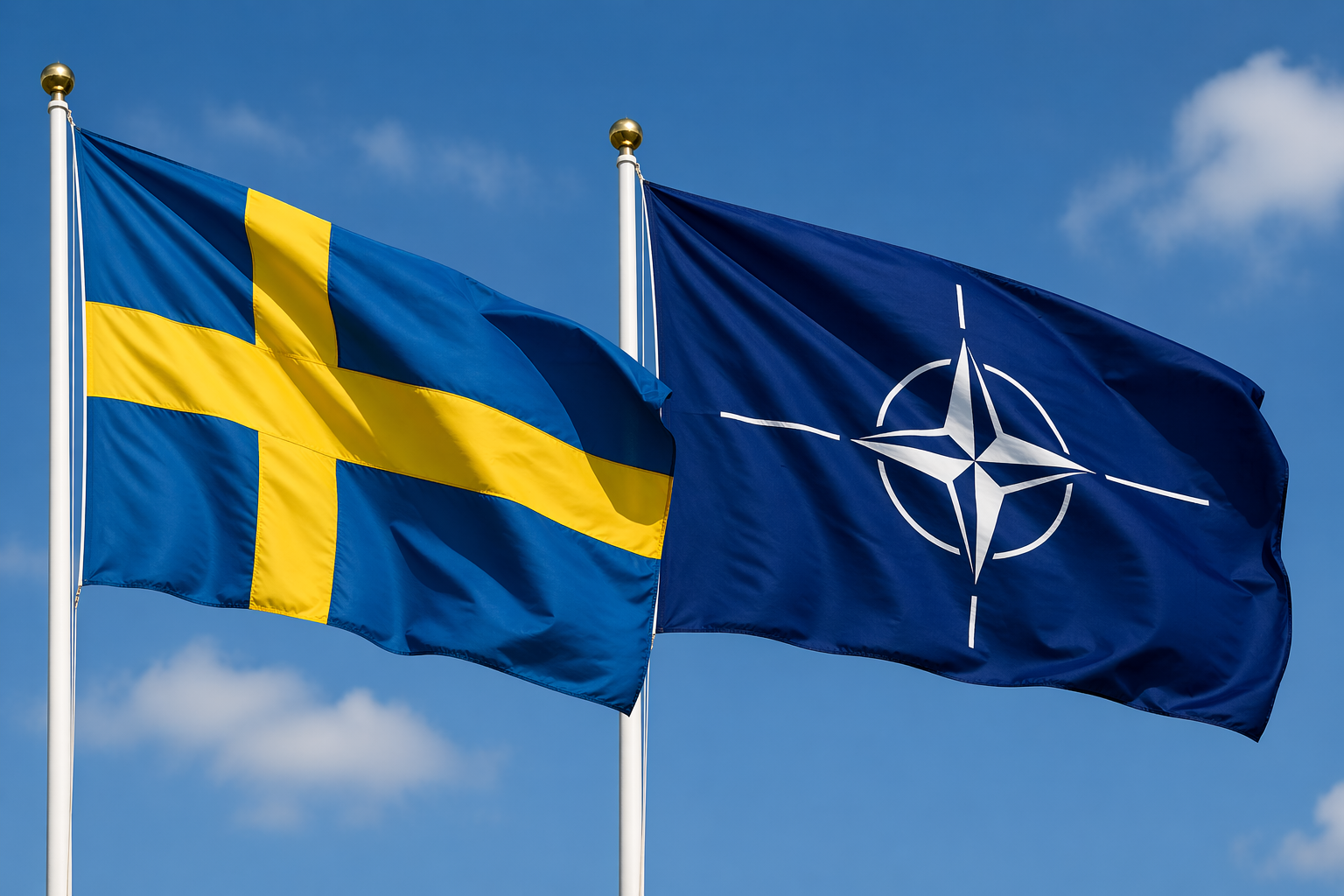
In this context, Sweden made the historic decision to apply for membership in NATO, ultimately becoming a full member in 2024. This marked the end of over 200 years of military non-alignment.
Sweden, by joining NATO, did accept the role of nuclear deterrence as a fundamental component of collective defence. This was a significant conceptual shift and no reservations against NATO’s nuclear parts ware made.
Initially, Swedish leaders emphasized continuity rather than change. They stressed that Sweden would not host nuclear weapons on its territory and would continue to advocate for arms control and disarmament. This position was intended to reassure both the Swedish public and the international community that core values remained intact.
Yet, over time, Sweden’s integration into NATO structures has deepened its engagement with deterrence policy. Swedish officials now participate in alliance discussions on nuclear strategy, planning, and signaling. While Sweden does not take part in nuclear sharing arrangements—unlike some NATO members—it is increasingly aligned with the alliance’s overall deterrence posture and also participated in the Steadfast Noon nuclear exercise this autumn.
The debate was very shallow and occurred during a very short period of time. 6 November 2021 the Social democratic at that time Minister of Defence, told the party congress that he would never as Minister of Defence apply for Nato membership, “I can guarantee you”. Just before 6 months later he informed that he had changed his mind and now supports a Swedish application to Nato. There was something before February 24th and something else after, as he stated and became a mantra in Sweden that spring. This is what happened, all leaders changed their minds and supported a Swedish application, while no-one else was allowed to speak up. Everyone who was either in a different position or just wanted to slow down the process and have a proper discussion and evaluation of the risks vs the benefits were called to be a Putinist and a useful idiot for Putin.
If anyone wanted to discuss nuclear weapons as a problem with Nato it was either seen as a distraction and just a minor thing that shouldn’t be a problem or a necessary evil for the better good of a protection against a Russian attack.
And finally, when the application for a Swedish membership in Nato should be debated and decided in parliament it was neither confirmed in a declaration or clear written text that Sweden should not host nuclear weapons, just a very much referred to hand shake between the governing conservative party and the Social Democrats. And that hand shake is not very much worth anymore. A slippery slope from the governments no nuclear weapons in Sweden, to there is no reason for it, to at least not in peace time, to in war time every option must be on the table to even have government representatives talking about European nuclear weapons and now the prime minister is in conversations with France about an extended French nuclear deterrence.
Supporters argue that the change is pragmatic and necessary. They contend that Sweden’s security cannot be viewed in isolation and that collective defense within NATO provides the strongest guarantee against aggression. In their view, accepting nuclear deterrence is not about endorsing nuclear weapons, but about acknowledging the realities of the current security environment.
This dual approach—combining talks about nuclear disarmament with supporting and participating in nuclear deterrence policies —defines Sweden’s current position. It reflects a country trying to balance it’s past with it’s new future.
In conclusion, Sweden’s journey from neutrality to NATO membership represents more than a policy change—it is a transformation in how the nation understands security in an increasingly uncertain world. The adoption, or perhaps acceptance, of nuclear deterrence is part of that transformation and not anything that was decided, it just happened.
Whether this balance can be sustained in the long term remains an open question. But one thing is clear: Sweden’s role on the global stage has entered a new era and we don’t know how or if we can ever go back to the Sweden we used to know.
In the upcoming national elections in September it looks fairly good for a government change so we’ll get a government lead by Social Democrat. How much more progressive they’ll be is yet to see, but hopefully they’ll get som pressure from the Green Party and the Left party, either if they are in government or not and also it’ll be easier for us to have dialogue and be a constructive critic. So with this bleak reality of today we hope for a little better position for us in civil society to influence politics in the future.
Thank you.