Let’s achieve denuclearization on the Korean Peninsula by abolishing extended deterrence and concluding the Korean Peninsula Peace Agreement and the DPRK–U.S. Non-aggression Treaty, and move toward a Nuclear-Free World
Ms. Gil Kim
SPARK (Solidarity for Peace and Reunification of Korea)
1. The collapse of the U.S.–Russia nuclear disarmament system and the unlawful military threats from nuclear-armed states toward non-nuclear states—particularly the U.S. aggression against Iran during nuclear negotiations—are weakening the credibility and normative strength of the NPT regime and expanding military confrontation while intensifying the global nuclear crisis. In this context, the past, present, and future nuclear issues on the Korean Peninsula go beyond being merely regional concerns; they serve as a microcosm of the global structure of nuclear confrontation and crisis today, as well as the prospects for their resolution.
2. Of the approximately 700,000 victims of the U.S. atomic bombings of Hiroshima and Nagasaki in 1945, one-tenth, or around 70,000 people, were Koreans, making Korea the country with the second-largest number of victims after Japan. At the 9th NPT Review Conference in 2015, Korean atomic bomb survivors made their presence known to the international community for the first time and subsequently demanded an official apology and compensation from the United States for the bombings.
3. Present-day nuclear confrontation on the Korean Peninsula lies within the broader historical continuum of Japan’s unlawful colonial rule and the U.S. atomic bombings of Hiroshima and Nagasaki. The U.S. use of nuclear weapons as part of its strategy to contain the Soviet Union marked the beginning of U.S.-Soviet nuclear confrontation, as well as the starting point for the division of the Korean Peninsula, the Korean War, and the subsequent nuclear standoff.
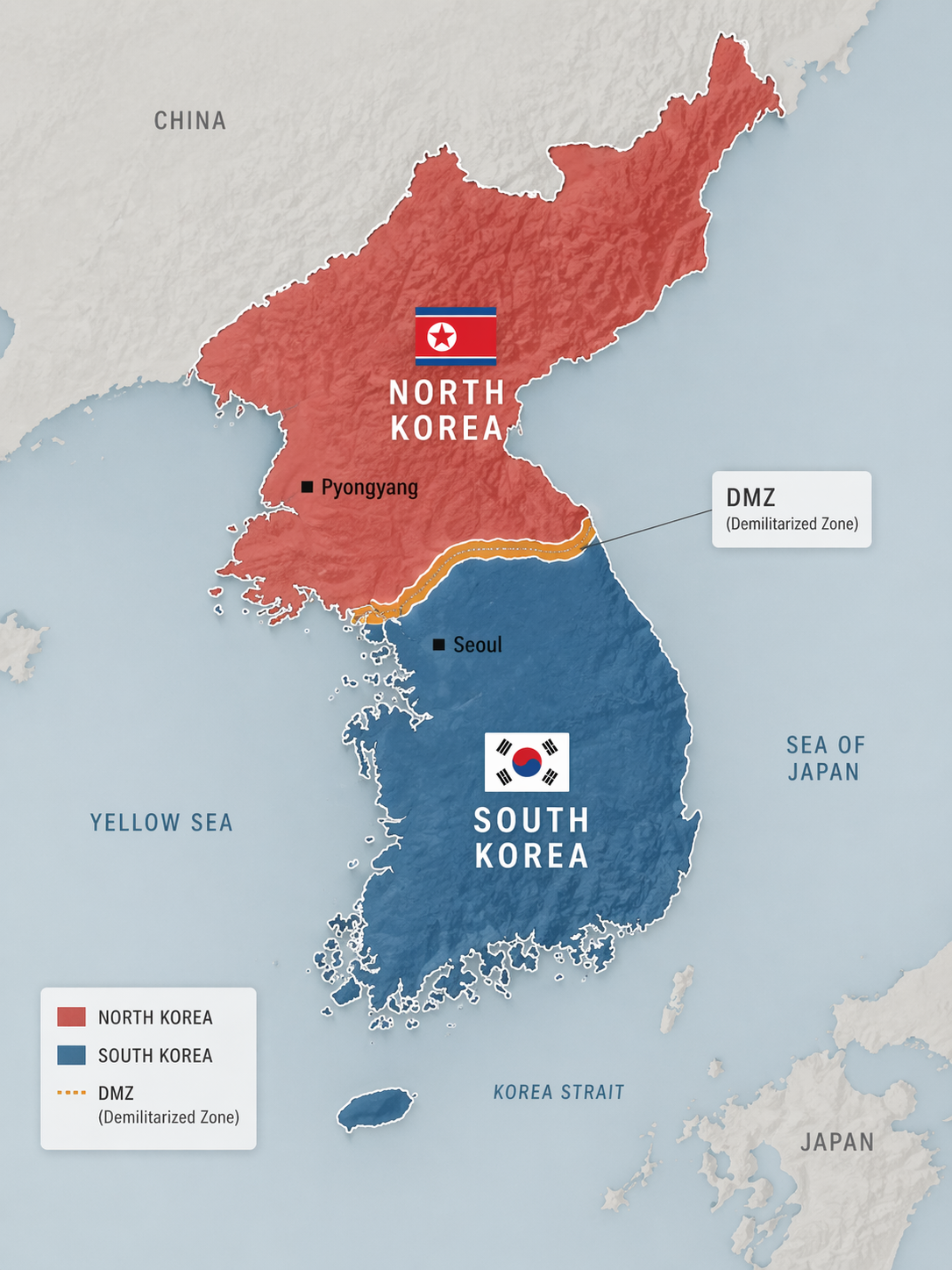
3-1. Under the ROK–U.S. alliance established immediately after the signing of the Korean Armistice Agreement (1953), the United States deployed tactical nuclear weapons in South Korea (1957), using South Korea as a forward base against the Soviet Union and China, and subsequently provided a nuclear umbrella (1978) and extended deterrence (2006). Confronted with this extended deterrence and the ROK–U.S. alliance’s adoption of a preemptive attack strategy and operational plans aimed at achieving regime collapse in North Korea as a war objective, North Korea in turn entered into alliances with the Soviet Union and China (1961) and pursued nuclear development and acquisition (2006). This dynamic has driven the military confrontation between the two sides into a full-fledged nuclear standoff. In other words, U.S. extended deterrence is the cause of North Korea’s nuclear weapons development and possession.
3-2. With the exception of the U.S.–Russia nuclear confrontation, which effectively espouses a doctrine of preemptive nuclear strike, the Korean Peninsula is the only region in the world where opposing sides confront each other with preemptive nuclear strike doctrines. The ROK–U.S. combined military exercises, the largest in the world, serve as a trigger that could escalate this acute nuclear confrontation on the Korean Peninsula into nuclear war. Seoul and Pyongyang are trapped in an extreme nuclear confrontation, in which it is uncertain when either may become another Hiroshima or Nagasaki.
3-3. Moreover, as further revealed by the recent U.S. aggression against Iran, the risk that artificial intelligence will be applied to preemptive uses of force and that humans will lose control over nuclear weapons systems is becoming a reality, further heightening the likelihood of a catastrophic outcome for humanity.
4. “Deterrence through threats” and “peace through strength” are not viable options; only dialogue and negotiation, and strict compliance with the UN Charter and international law, can serve as reliable means of guaranteeing security and peace for the Korean Peninsula, Northeast Asia, and the world. Above all, to reduce the likelihood of nuclear war, the U.S. preemptive nuclear strike doctrine and the DPRK Nuclear Forces Policy Law must be abolished as a top priority. Extended deterrence is a violation of Article 2(4) of the UN Charter, which prohibits the threat of force, and Article 1 of the TPNW. The ROK–U.S. combined military exercises, as part of extended deterrence, represent the most extreme form of the threat of force directed at North Korea and constitute a violation of the UN Charter. Anticipatory attacks or preemptive attacks under the pretext of an adversary’s “imminence” or “signs of an attack,” as well as preventive attacks, fall entirely outside the scope of the right to self-defense under Article 51 of the UN Charter and are, without question, illegal.
5. “Deterrence through threats” policies and “peace through strength” policies must be replaced by agreements and treaties reached through dialogue and negotiation. The way out of the Korean Peninsula’s never-ending mutual threats, deterrence, and confrontation inherent in a security dilemma lies in the conclusion of a peace agreement on the Korean Peninsula and a DPRK–U.S. non-aggression treaty. The U.S., from the standpoint of taking responsibility for resolving a problem it helped create, should take the lead in resolving the nuclear confrontation on the Peninsula, and this process must begin with the abolition of large-scale ROK–U.S. combined military exercises. Given that the ROK–U.S. alliance maintains overwhelming military superiority over North Korea, conducting these exercises—unprecedented anywhere in the world and held twice a year—which are perceived by North Korea as a threat to its regime, cannot be justified under any circumstances. In addition, the Armistice must be replaced by peace agreement. There is no reason whatsoever to continue the military confrontation and maintain the armistice for more than 70 years. South Korea and the U.S.’ elimination of military hostility toward North Korea and the provision of security guarantees through the conclusion of a peace agreement are fully consistent with the spirit of the UN Charter and the Declaration on Principles of International Law concerning Friendly Relations and Cooperation among States (1970), which enshrines the principles of sovereign equality, peace, and friendly relations among states. The DPRK–U.S. non-aggression treaty is a mechanism designed to restrain the U.S., which tramples on a peace agreement and is capable at any time of engaging in hostile military actions against North Korea. This will be the only way to achieve denuclearization and peace on the Korean Peninsula. It will also set a precedent for a nuclear-armed state moving toward disarmament and open the way to a nuclear-free world and lasting peace.
6. However, the road to denuclearization on the Korean Peninsula now faces serious challenges. North Korea has designated South Korea as its “permanent enemy” and is accelerating its nuclear weapons buildup. The South Korean government is also pursuing potential nuclear capabilities through the introduction of nuclear-powered submarines and the revision of the ROK–U.S. Nuclear Energy Agreement, while around 70% of South Koreans support the pursuit of nuclear weapons and nuclear confrontation.
7. To overcome these difficulties, we will hold the Seoul People’s Tribunal to examine the illegality of the U.S. nuclear bombings in 1945 and to demand that the U.S. make an official apology and provide compensation. The Seoul People’s Tribunal is based on the recognition that the law belongs to the people, not exclusively to states and authorities, and that it is a judicial means for the people themselves to defend their rights and realize justice. Through this, we aim to hold the U.S. responsible for its past nuclear use and the current nuclear confrontation on the Korean Peninsula, and to present a path toward future denuclearization of the Korean Peninsula and the world. Furthermore, we seek to raise the alarm over the repeated unlawful use of force by authorities of various states, including the United States and Israel, who, even at this very moment, place themselves above the law, betray the interests of humanity and the international community, and sacrifice civilian lives and property through genocide, aggression, war crimes, and crimes against humanity. In doing so, we hope to take even a small step toward realizing peace on the Korean Peninsula and in the world.